
Dan Whitten
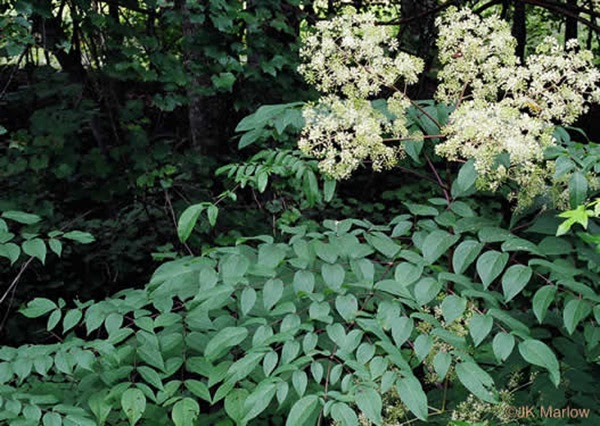
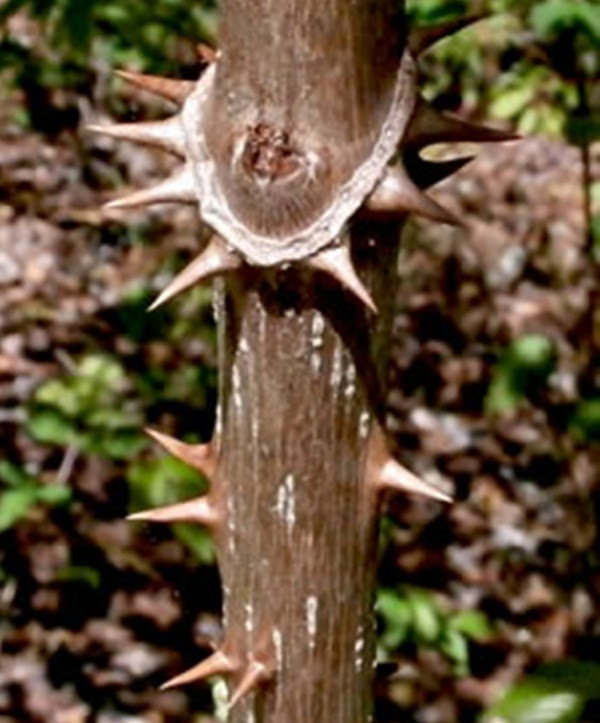
Now is the time to notice a quite showy plant, Devil’s Walkingstick or Aralia spinosa. This is a woody shrub to a small tree with large compound leaves arranged bipinnately. The leaf is attached to the trunk and can be two to four feet long and three feet wide making it the biggest leaf of any plant that is not a member of the palm family. At the top of the plant, we now are seeing the beach ball size cluster of whitish flowers in a terminal panicle. These attract every type of pollinator you can think of including flies, bees, wasps, butterflies, moths and more. This is an “armed and dangerous” plant. With a specific epithet like “spinosa”, you’d think it would have spines. But the plant technically has prickles, (think roses, greenbriers and blackberries). Prickles are epidermal and wide at the base but thin and sharp at the tip. All of us that have picked blackberries have removed prickles from our skin that have broken off the “skin” of the blackberry canes. Devil’s Walkingstick likes to grow on edges whether they be forest edges, roadsides or the shores of Lake Jocassee. They usually have a straight trunk, like a walking stick, with foliage above and flowers topping it all. But only the Devil could hold onto this armed stick. The fruits are black drupes with red stems that are also attractive a little later. They don’t taste good to me, but birds sure seem to like them. The next time you see this plant, try to come close to hear the hum of furious activity and count how many insect species you see busy at work. But just don’t grab one when you are about to slide down a steep hillside. ~Dan Whitten