
Sheryl White
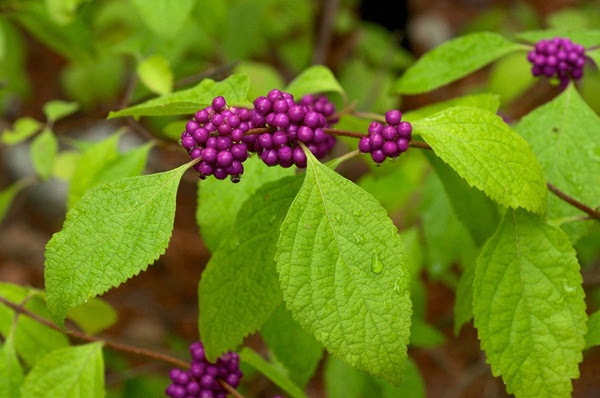

“Can you eat these”?
Six Mile Elementary 4th graders asked me as we walked toward the dock for their Jocassee Wild Child trip on Wednesday. Looking at their teacher, I explained they are edible and told her if she was okay with it, I’d let each one of them taste a berry if they wanted to. “Absolutely, that’s part of the adventure”, she smiled and answered. What were they asking about? American beautyberry! This gorgeous native shrub grows all around the Park office and one of the kids had picked up a broken branch which was full of small, glossy, purple berries. The squeals and giggles were contagious as the kids talked and laughed over each other, some excited, some hesitant to try one. Each kid picked a berry off the branch as they passed it around the boat. The expressions and sounds they made were hilarious as they bit into this tiny, mildly astringent fruit. “Eww,” “yuck,” “hmmm… that’s a little bitter but not terrible.” Everybody had an opinion. Turns out, the fruit is a valuable resource for birds and wildlife. Squirrels, ‘possums and raccoons enjoy the ripe berries, and deer will occasionally browse on the leaves. Humans can use them, too–add a little sugar and cook them to make lavender colored jelly or use the crushed leaves to repel mosquitoes. There are so many uses for this impressive native shrub. It’s easy to recognize this time of year. If you happen to find one, be like these curious & brave 4th graders. Taste it, and see what you think! ~Sheryl White, JLT guide and JWC instructor.