Sheryl White
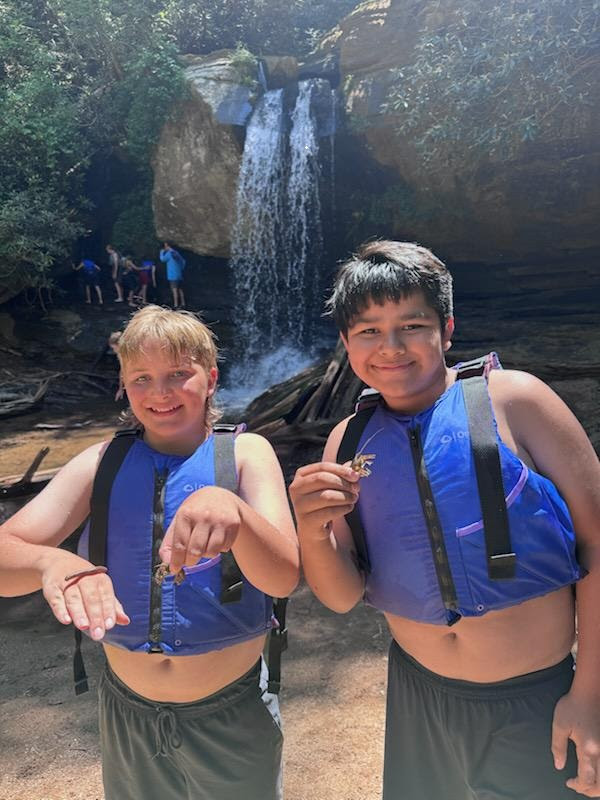
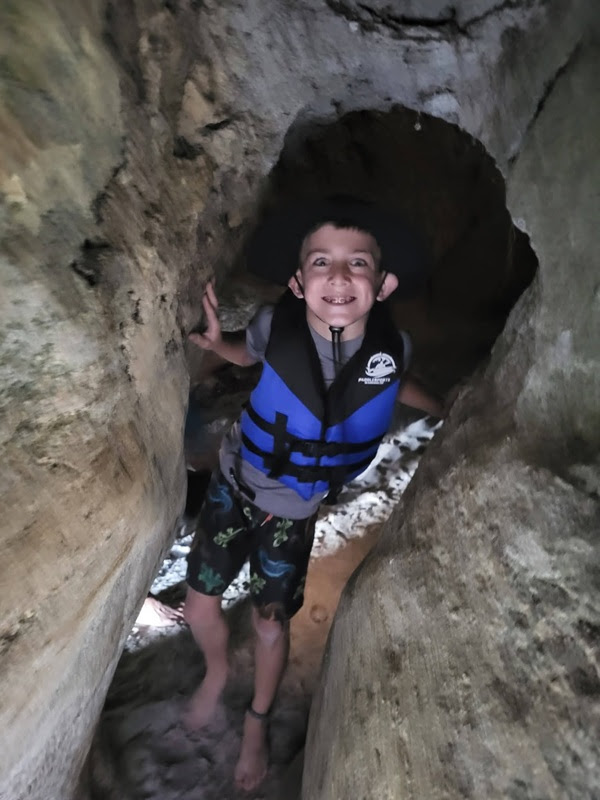
Jocassee was 12.8’ low this past Thursday as we finished the last of the spring Jocassee Wild Child Outdoor Learning Experiences. Those low levels didn’t stop us from having a blast, though. Several of the benefits of low water are discovering long stretches of beaches, rock outcrops (that make great new jumping spots) and the chance to explore small caves that are otherwise partially submerged under normal conditions. We’ve named one of these caves, the Otter Cave. Kids eyes light up when they’re asked if they’d like to see an otter cave and wow, does the excitement and laughter begin. Crawling on hands and knees through soft white sand, searching for paw prints and scat or shining a laser light into the darkness to check the depth of the cave leave indelible memories on some of these kids and a few adults, too. So does learning to identify trees by their leaves, searching the streams for salamanders and crawdads or skipping pieces of ancient rock across the lake surface. They get to hear about the Cherokee people who were caretakers of this land long before we came along. They make mica wishes and stewardship promises to continue to care for this place, just as the Cherokees did. These kids leave here with a better understanding of what’s in their backyard and how truly remarkable it is. Expected and much needed rain this week is welcomed and will likely raise the lake level a few feet but regardless of the level, Jocassee is always ready to teach us something. All we have to do is embrace it like a Wild Child and pay attention. ~ Sheryl White, JLT naturalist guide and JWC instructor.
Exploring an Otter Cave
Photo by Amie Heddon
Jackpot…
two crawdads and a millipede!
Photo by Randy Milford