
Sheryl White
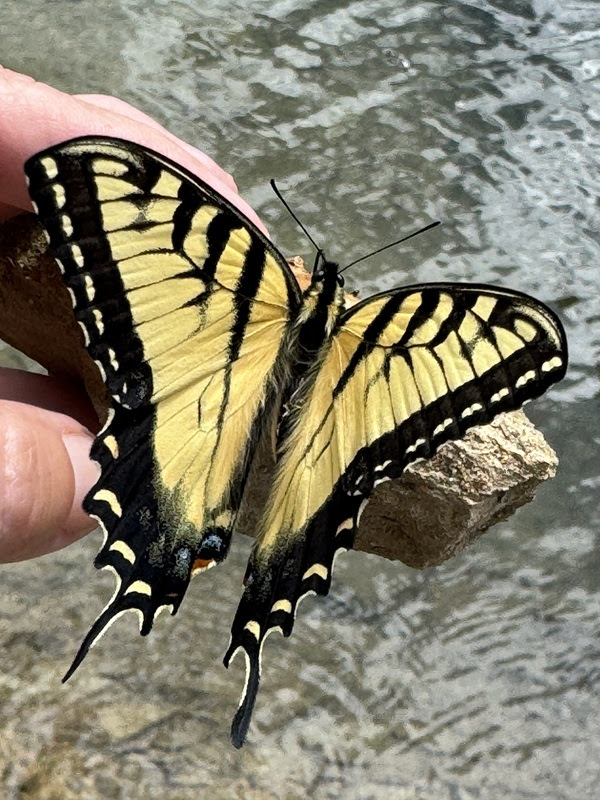
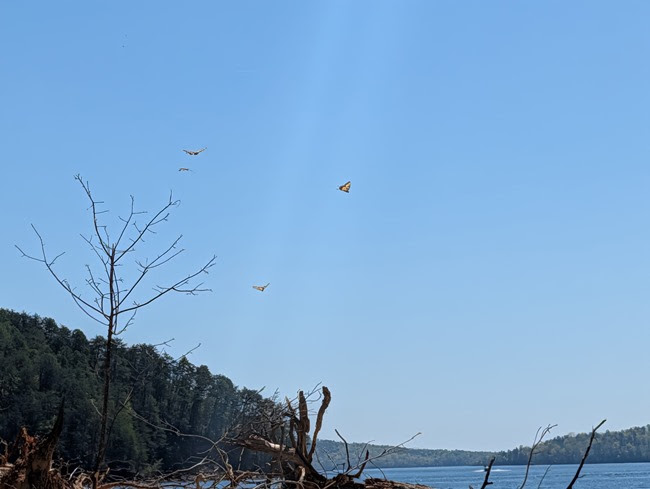
After overwintering as a chrysalis in diapause, hidden in curled leaves and tree crevices or protected under rock ledges, our adult tiger swallowtail butterflies have begun to emerge. Several have been spotted fluttering across coves and narrow channels of the lake in search of the perfect spot to complete two very important tasks. These butterflies need to mate and lay eggs and only have about 2 weeks to accomplish this. While two things don’t sound like a lot, consider trying to find a mate (when numbers are limited this time of year) while also avoiding hawks, owls, birds, cold temperatures and time restraints. Talk about pressure. It helps that each female can lay up to 250 eggs before they die. Once laid, these eggs will hatch within 4-10 days and these caterpillars will feed on a host of tree species, from tulip poplar, wild cherry, basswood and birch, just to name a few. After five instars, they reach the adult stage. Three generations per year ensure a thriving population. This one species provides not only beauty for the human eye but aids in plant reproduction through pollination and are a much-needed protein source for wildlife that depends on them for food. The plant diversity of the Jocassee Gorges along with our temperate climate make this an ideal place to raise a butterfly family. As abundant as they are, you can understand why they’re SC’s state butterfly ~Sheryl White, JLT naturalist guide